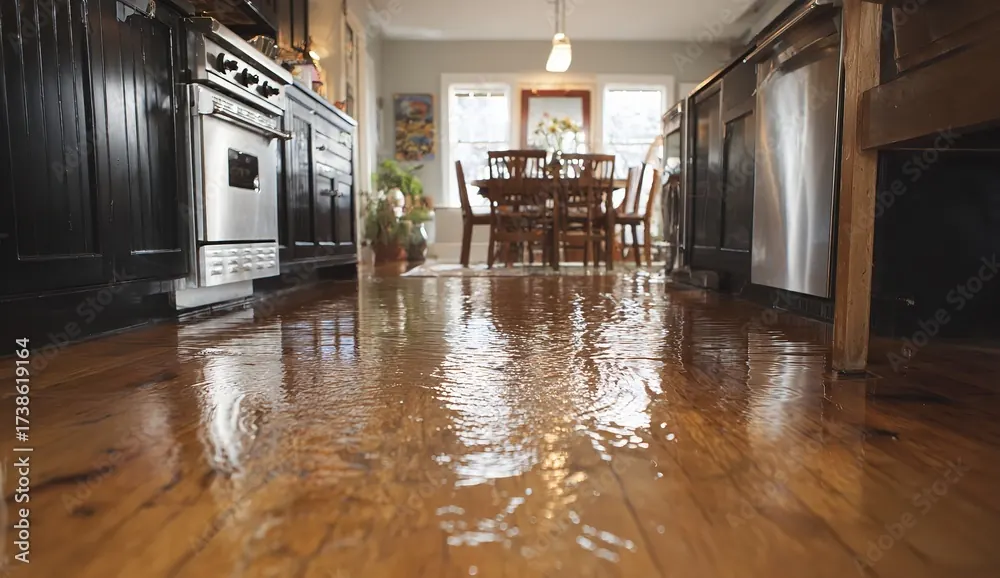
Signs of Hidden Water Damage in Your Walls and Floors

Not all water damage announces itself with a flood or a burst pipe. Some of the most destructive water damage happens slowly and silently — a pinhole leak inside a wall, a slow drip under a shower pan, or a poorly sealed window letting in a little moisture each time it rains. By the time you can see the damage, the problem has often been growing for weeks or months.
1. Discoloration or Staining on Walls and Ceilings
Yellow, brown, or copper-colored stains on walls or ceilings are one of the most reliable indicators of water intrusion. These stains form as water evaporates and leaves behind minerals and residue. A stain that changes shape or grows after heavy rain points to an active roof leak; one that stays the same size may be from an old, repaired leak.
2. Peeling, Bubbling, or Warping Paint and Wallpaper
Paint and wallpaper that peels, bubbles, or blisters — especially in areas not near direct sunlight — often indicates moisture behind the surface. Drywall that has been repeatedly wetted and dried will eventually lose its bond with paint and wall coverings.
3. Soft Spots or Spongy Feeling Underfoot
If your floor feels soft, springy, or slightly bouncy in certain spots — particularly in bathrooms, kitchens, or laundry rooms — subfloor damage from water is a likely culprit. In vinyl and tile floors, loose or shifting tiles without apparent cause can also indicate water damage to the adhesive and subfloor beneath.
4. Musty or Earthy Odors
Mold produces microbial volatile organic compounds (MVOCs) that create a distinctive musty, earthy smell — even before visible mold colonies are present. If a room, closet, or basement consistently smells damp or musty and you can't identify the source, moisture is almost certainly present somewhere in the structure.
💡 Pro Tip: San Antonio's humid subtropical climate makes mold growth particularly fast. Once moisture is present, mold can begin colonizing within 24–48 hours.
5. Warped, Buckled, or Cupping Hardwood Floors
Hardwood is highly sensitive to moisture. Boards that cup (edges higher than centers), crown (centers higher than edges), or buckle upward are absorbing moisture — either from above through spills and leaks or from below through a crawl space or slab. Even engineered hardwood will warp when moisture levels become excessive.
6. Visible Mold Growth
Small black, green, or white spots in corners, on grout lines, or along baseboards are obvious signs of water damage. Mold cannot grow without moisture, so visible mold always indicates a water problem — even if you can't find the source. Never paint over mold; it must be properly remediated.
7. Unexplained Increases in Your Water Bill
A sudden spike in your water bill without a change in usage habits may indicate a hidden leak in your plumbing system. To test for a leak, turn off all water-using appliances and fixtures and check your water meter. If it continues to move, you have water flowing somewhere it shouldn't be.
8. Rust Stains Around Fixtures
Rust-colored stains around the base of toilets, under sinks, or around pipe fittings indicate long-term moisture presence. While rust itself isn't a water emergency, it signals chronic moisture that is likely affecting surrounding materials.
9. Cracks in Drywall or Plaster
While some drywall cracking is normal settling, horizontal cracks and cracks that appear near windows, doors, or ceilings after heavy rain or plumbing events can indicate water damage has caused structural materials to swell, warp, or shift.
What to Do If You Suspect Hidden Water Damage
If you notice any of these signs, the smartest move is to have a professional moisture assessment performed. Restoration technicians use non-invasive moisture meters and thermal imaging to detect water in walls, floors, and ceilings without tearing anything open. This allows them to pinpoint the source and scope of damage before any remediation work begins.